
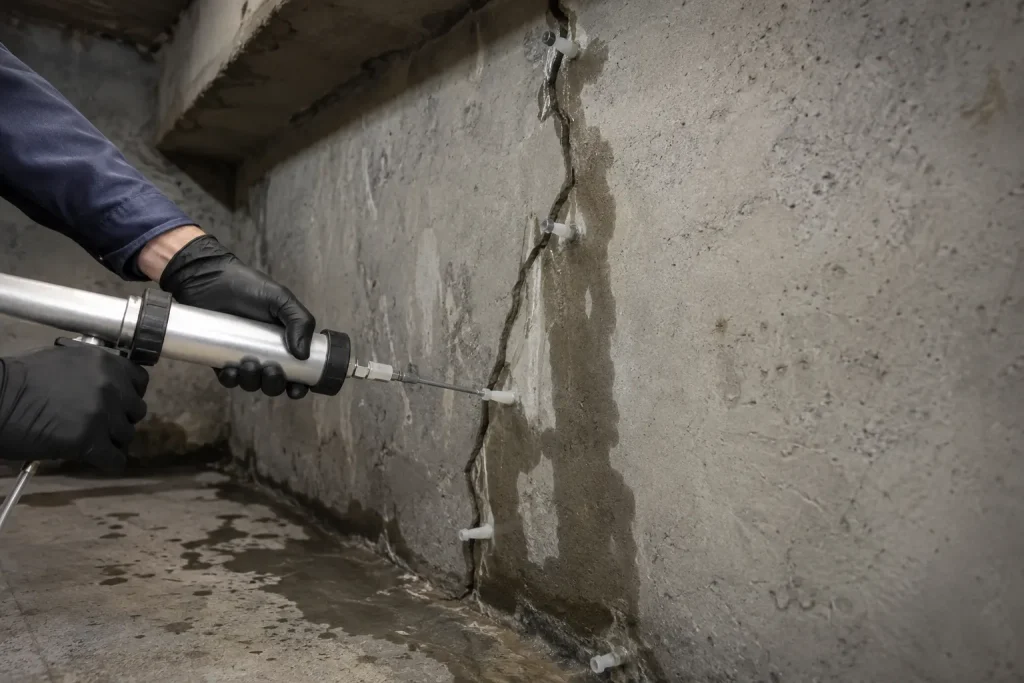
Concrete structures face constant exposure to water, pressure, temperature changes, and ground movement. Over time, these factors create cracks that allow moisture to enter foundations, walls, tunnels, and other structures. Chemical Injection has become one of the most effective methods for stopping water infiltration and restoring structural integrity. This repair technique targets cracks directly, sealing pathways where water enters and preventing further deterioration.
Industry data from the International Concrete Repair Institute shows that water intrusion remains one of the leading causes of concrete degradation worldwide. Unrepaired leaks often lead to corrosion of reinforcing steel, freeze-thaw damage, and reduced service life. Chemical Injection addresses these issues without extensive demolition or reconstruction. Contractors can complete many repairs within hours while minimizing disruption to operations.
We regularly see Chemical Injection used in parking garages, basements, wastewater facilities, dams, and underground structures. The process works by injecting specialized resins into cracks under controlled pressure. Once inside, the material expands or hardens to form a watertight barrier. Understanding how this technology works helps facility owners choose the right repair solution before minor leaks become major structural concerns.
What Is Chemical Injection and How Does It Work?
Understanding the Injection Process
Chemical Injection is a repair method that introduces specialized polyurethane or epoxy resins into concrete cracks. The process begins with a detailed inspection to identify crack patterns, moisture sources, and structural conditions. Technicians then install injection ports along the crack and seal the surface between ports.
Once preparation is complete, resin is pumped into the crack under controlled pressure. The material follows the crack path and fills internal voids that are invisible from the surface. Polyurethane resins react with water and expand significantly, creating a flexible waterproof seal. Epoxy resins cure into rigid materials that restore structural strength. The selection depends on crack movement, moisture conditions, and repair objectives.
A properly executed injection reaches the full depth of the crack. This creates a permanent barrier against water infiltration. Because the repair occurs within the concrete, the structure maintains its original appearance while gaining long-term protection.
Types of Resins Used in Chemical Injection
Polyurethane vs. Epoxy Systems
Different repair conditions require different resin technologies. Selecting the correct material determines the long-term success of a Chemical Injection project.
| Resin Type | Primary Purpose | Expansion Rate | Best Application |
|---|---|---|---|
| Polyurethane Foam | Active leak sealing | Up to 20 times volume | Water leaks and moving cracks |
| Polyurethane Gel | Waterproofing | Moderate expansion | Fine cracks and joints |
| Structural Epoxy | Strength restoration | No expansion | Structural crack repair |
| Hybrid Resin | Combined performance | Controlled expansion | Mixed repair conditions |
Polyurethane systems excel when water is actively entering a structure. Their expansion characteristics allow them to fill irregular voids and stop flowing leaks. Many formulations cure within minutes, making them ideal for emergency repairs.
Epoxy systems serve a different purpose. These materials bond concrete surfaces together and can restore significant structural capacity. Engineers frequently specify epoxy injection when cracks result from loading conditions rather than moisture intrusion. The cured material often achieves compressive strengths exceeding 10,000 psi, making it stronger than many concrete mixes.
Common Applications for Chemical Injection Repairs
Where This Repair Method Delivers Results
Chemical Injection is widely used across commercial, industrial, and infrastructure projects because of its versatility. The technique addresses both active leaks and preventative waterproofing requirements.
Common applications include:
- Basement wall crack repairs.
- Parking structure waterproofing.
- Elevator pit leak sealing.
- Tunnel and subway waterproofing.
- Wastewater treatment facilities.
- Retaining walls and foundations.
- Dams and hydroelectric structures.
- Utility vaults and underground chambers.
Water intrusion often accelerates deterioration in these environments. For example, reinforcing steel begins corroding when moisture and oxygen penetrate concrete. Corrosion products expand, creating internal pressures that generate additional cracking. Chemical Injection interrupts this cycle by eliminating water pathways before extensive damage occurs.
Many municipalities now include injection repairs within preventative maintenance programs. Early intervention typically costs significantly less than major structural rehabilitation projects. See how we help with Robotic Construction Underwater: The Next Frontier.
Benefits of Chemical Injection for Concrete Repair
Why Engineers Choose This Method
Chemical Injection offers several advantages compared with traditional repair methods. The process targets the root cause of leakage rather than treating surface symptoms.
Key benefits include:
- Stops active water leaks immediately.
- Requires minimal demolition.
- Preserves structural appearance.
- Extends service life of concrete assets.
- Reduces long-term maintenance costs.
- Works in confined and underground spaces.
- Provides durable waterproof protection.
- Minimizes operational downtime.
Industry repair contractors report that properly installed polyurethane systems can remain effective for more than 20 years under normal service conditions. Structural epoxy repairs often perform for the remaining life of the structure when crack movement is eliminated.
We find that project owners value the speed of installation. Traditional excavation and reconstruction projects may require weeks of work. Chemical Injection repairs can often be completed in a single day, reducing disruption and lowering labor expenses.
Factors That Influence Long-Term Performance
Ensuring Successful Repairs
Successful Chemical Injection projects depend on more than selecting the right resin. Proper assessment and installation procedures significantly influence performance outcomes.
Technicians must identify whether cracks are active or dormant. Active cracks continue moving because of thermal changes, settlement, or loading conditions. Flexible polyurethane materials generally perform better in these situations. Dormant cracks may benefit from rigid epoxy systems that restore strength.
Environmental conditions also matter. Temperature, moisture content, crack width, and water pressure affect material selection and injection procedures. Experienced repair specialists evaluate these factors before beginning work. Quality assurance testing and post-repair inspections further improve long-term reliability.
Regular monitoring after repair helps verify performance. While injection systems are highly durable, identifying new movement early allows maintenance teams to address issues before additional damage develops.
Conclusion
Chemical Injection remains one of the most effective solutions for repairing concrete cracks and stopping water leaks. The method delivers targeted repairs without extensive demolition while providing durable waterproofing and structural restoration. Polyurethane systems excel at sealing active leaks, while epoxy resins strengthen damaged concrete. Together, these technologies help protect foundations, tunnels, parking structures, and industrial facilities from costly deterioration. By addressing moisture intrusion at its source, Chemical Injection extends service life, reduces maintenance costs, and preserves structural performance. When performed by qualified professionals using the correct materials, this repair method provides reliable long-term protection for critical concrete infrastructure.